
I started writing a LinkedIn post about this a few weeks ago and kept going. There's just too much to say about it…
Here's what I've been sitting with: when you design a brand touchpoint, especially the way we do at Co-Effect (through community engagement, asking hard questions, really listening) you stop doing “branding” or “website design” at some point. You're doing service design.
Let me explain what I mean…
A website is never just a website
Most organizations come to a project like a website redesign or a brand refresh with a clear brief. They need something that looks good, represents them well and communicates what they do and that's a very reasonable starting point.
But when you start the discovery process, something shifts. Before anyone touches a colour palette or picks a font you have to answer some much harder questions. Who is this actually for? What do they need to feel when they encounter it? What does this organization believe about itself? And critically…does the community or clients it serves see it the same way?
That last question is where things get interesting. The gap between how an organization understands itself and how its community experiences it is often significant. Sometimes it's spot on. But when it isn't, that gap is where the important and interesting work lives. And I believe that the only people who can tell you about it are the people themselves.
Designing with, not for
This is a principle I come back to constantly. You cannot design a service experience, let alone a touchpoint well without understanding who it's actually for. And the only way to understand that is to ask them. To involve them. To design with the people you are serving and not by making assumptions about what they need.
This is equity-centered engagement in practice. It's not a checkbox or a consultation process bolted onto the end of a project but it's the foundation. When you skip it, you end up with something that might look great but doesn't really land for the people it's meant for…because assumptions about what people need are almost always wrong until you've tested them with the people themselves.
At Co-Effect this is how the work gets done and that's why I’ve realised that what looks like brand work from the outside is something much deeper on the inside.
What a touchpoint teaches you
Here's something I've noticed consistently; when you go deep on a single touchpoint, I'm talking really deep, with community engagement driving the process, then you almost always learn something that extends far beyond that one project.
You learn something about the service itself! About how people are experiencing the organization. About where the friction is, where the trust is and where there's an opportunity to do something better. A brand touchpoint done well is a window into the whole service experience, and an opportunity to extend what we learn into other areas.
The zoom out
So what does it mean to hold all of this at once? To be working on a single communications piece while keeping the full service experience in view?
It means that what you learn in one touchpoint can and should inform the others. It means that the discovery work you do for a website redesign might reveal something important about how intake works, or how the organization talks about itself in community spaces, or where people are falling through the cracks. That's the work doing what good work does.
The zoom in and the zoom out have to keep talking to each other and when they do, you end up with something that's more than a good-looking deliverable...you end up with something that serves people.
Why this matters for mission-driven organizations
For non-profits, community health centres, food banks and organizations working in mental health or social services, this isn't abstract. The touchpoints they put into the world are part of what allows them to do their work. A website that doesn't land with the community it serves, a brand that doesn't reflect who the organization really is, a piece of communications that creates confusion rather than clarity and these have real consequences for real people.
Getting it right is part of the service. And getting it right requires treating every touchpoint as a moment in someone's experience of an organization they're counting on.
That's what brand touchpoints as service design really means. (And by the way it's why I'm so glad to be doing this work with a team that understands it the same way I do!)
Post by Heather Daam-Rossi
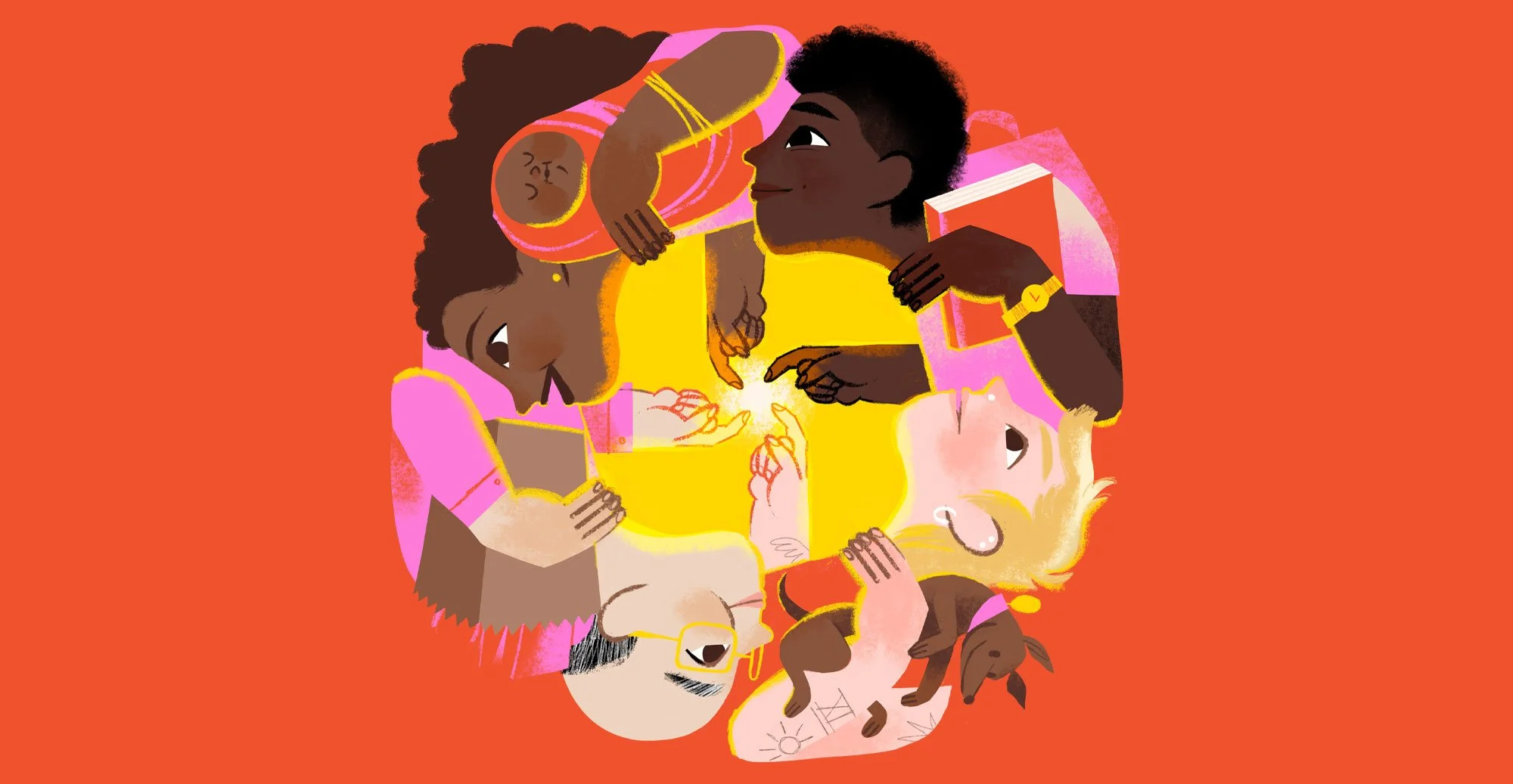
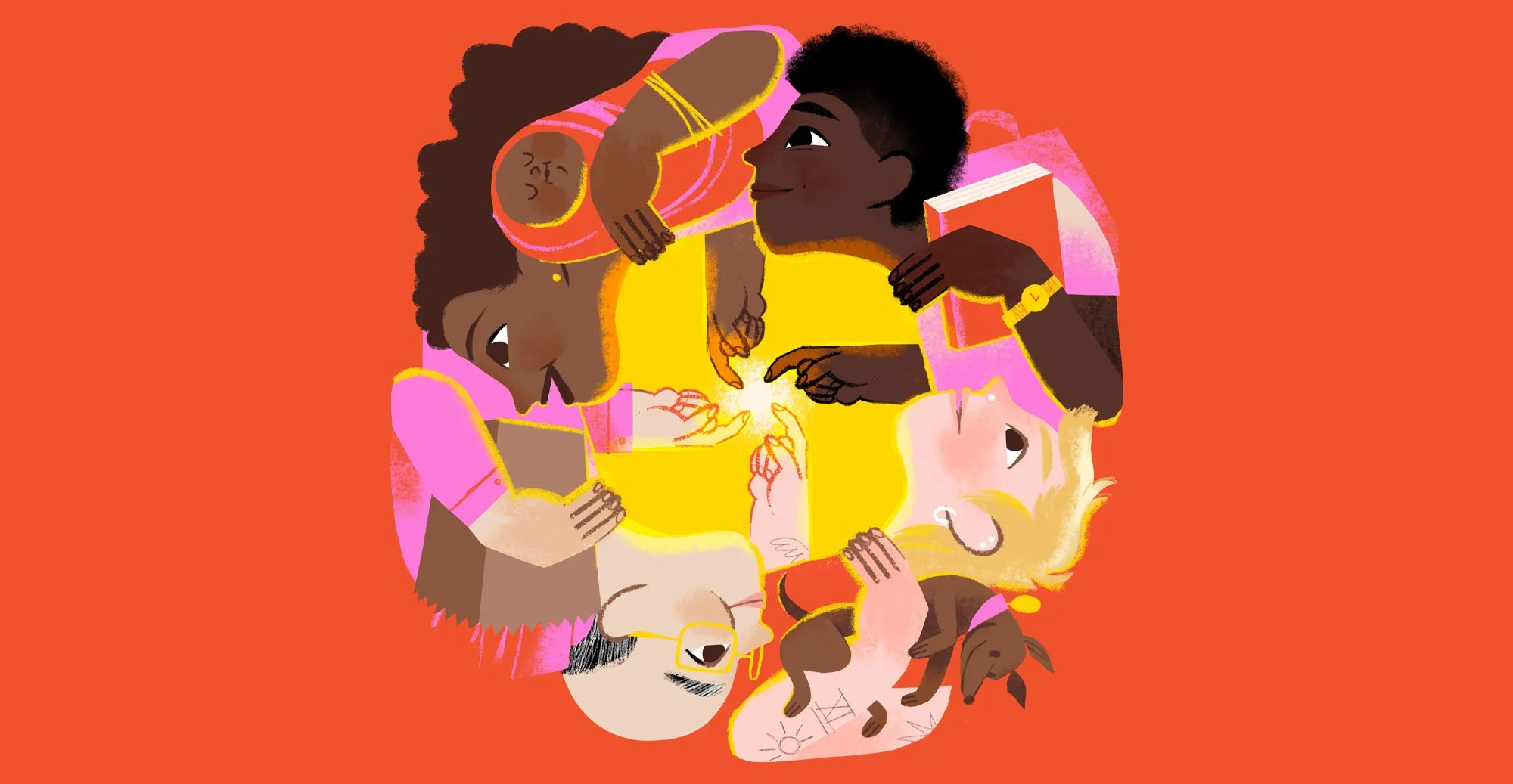
Illustration by Jillian Thalman
Every illustration on this blog comes from an artist we love working with, bringing their own interpretation to the piece.